
A Florida Class D license is far more than a legal requirement; it's a professional credential that marks the distinction between a casual observer and a disciplined protector. Whether you're transitioning from a different industry or looking to formalize your experience in private protection, the quality of the security license training florida provides will define your future authority in the field. It's natural to feel a sense of hesitation when faced with complex state applications, the mandatory 40-hour curriculum, or the pressure of the final exam. You deserve a clear, reliable path toward your professional goals.
This guide ensures you master the licensing process and build a foundation for a successful career. We'll demystify the $97.75 in total state fees, explain the specific requirements for Course A and Course B, and help you navigate the FDACS application steps with absolute precision. By following this roadmap, you'll obtain your license efficiently while gaining the skills to feel truly confident on the job. Let's begin the journey of securing your professional future today.
Key Takeaways
- Understand the legal framework of Florida Statutes Chapter 493, which establishes the mandatory standards for all unarmed security professionals in the state.
- Complete the comprehensive 40-hour Security License Training Florida curriculum to master essential skills in liability, emergency procedures, and professional ethics.
- Navigate the state application process with confidence by following a clear, step-by-step roadmap from initial training to final licensure.
- Learn how specialized instruction at a dedicated training center prepares you for the gravity of your future responsibilities and sets the stage for career advancement.
What is the Florida Class D Security License?
The Florida Class D license serves as the essential professional credential for any individual seeking a career as an unarmed security officer. Regulated under Florida Statutes Chapter 493, this license ensures that practitioners maintain the high standards of conduct and knowledge necessary to protect lives and property. It's more than a simple permit; it's a testament to your readiness to handle the complexities of private protection. To qualify, you must be at least 18 years of age, be a U.S. citizen or permanent resident, and demonstrate a history of good moral character through a comprehensive background check.
Understanding what is a security guard? requires looking beyond the uniform to the legal responsibilities involved. This is precisely why the state mandates 40 hours of professional instruction. Completing the right security license training florida curriculum provides the legal and tactical foundation you need to operate safely. This training isn't optional. It's the standard that protects both the officer and the public.
Who Needs a Class D License in Florida?
If your job description involves protecting people or assets, you likely need this credential. This requirement applies to various roles, including gate guards, mobile patrol officers, and armored car personnel. Securing the proper security license training florida is the first step toward professional legitimacy. While the Class D license is for unarmed positions, it's the mandatory precursor for many who eventually pursue the Class G license for armed work. Working without a valid license is a serious offense. Florida takes unlicensed activity seriously; doing so can result in personal fines or being barred from the industry entirely. Stay compliant to stay employed.
Exemptions to the Training Requirement
Florida recognizes that seasoned professionals often possess existing skills that align with state standards. Under specific provisions, certain individuals can bypass the standard 40-hour training mandate. These exemptions typically apply to:
- Active or former law enforcement officers with academy certification.
- Correctional officers who have completed state-approved training.
- Military veterans with equivalent training under Rule 5N-1.119(4), Florida Administrative Code.
To claim an exemption, you must provide verifiable proof of your background. This usually involves submitting a DD-214 for veterans or official training records for former law enforcement. Even with an exemption, you must still complete the state application and pay the required fees. We recommend verifying your specific status with the FDACS before assuming you are exempt from the educational hours. It's a proactive way to ensure your career transition remains smooth and professional.
The 40-Hour Security Training Curriculum: What You Will Learn
Mastering the Florida licensing process requires a deep dive into the state mandated curriculum. This 40-hour program is structured to transform a newcomer into a prepared professional. It's not simply about sitting through lectures; it's about internalizing the gravity of private protection. High-quality security license training florida programs focus on the dual nature of the job: being a visible deterrent and a capable first responder. You'll learn that your presence alone is a tool for safety.
The official 40-hour security training curriculum is divided into Course A and Course B. Course A focuses heavily on the legal foundations of the industry. This includes a rigorous examination of Florida Statutes, specifically regarding search and seizure, liability, and the use of force. Understanding these boundaries is what keeps an officer legally safe while they protect others. It covers the nuances of Chapter 493, detailing exactly what an unarmed officer can and cannot do. You'll learn about the limits of detention and the legal implications of search and seizure in a private setting. This knowledge is your primary shield against professional liability.
Beyond the law, the curriculum emphasizes emergency readiness. Officers learn the basics of fire suppression, disaster response, and life-saving first aid. This ensures you're prepared for the unexpected, whether it's a medical emergency or a building evacuation. Professionalism and ethics are woven throughout the course, establishing a standard of deportment that reflects the brand of a disciplined expert. You'll discover how a composed attitude can prevent a situation from escalating.
Core Security Skills and Tactics
Professional security work relies on precision and attention to detail. You'll learn observation and reporting techniques that turn a simple patrol into a detailed incident record. Access control procedures are taught for diverse environments, ranging from gated residential communities to busy commercial hubs. Conflict de-escalation is another vital skill. Learning how to manage crowds and diffuse tension without physical intervention is the hallmark of a seasoned professional. These skills allow you to maintain order while respecting the rights of everyone on the property.
Specialized Knowledge Modules
Modern protection requires an awareness of global and local threats. The curriculum includes modules on terrorism awareness, teaching you how to recognize suspicious activities and report them effectively to the proper authorities. Crime and accident prevention methods are also prioritized to help you identify hazards before they lead to an incident. You'll explore how to communicate clearly with the public, ensuring that your presence provides a sense of safety and calm. If you're ready to begin this journey, choosing a school that prioritizes these professional responsibilities is your best first step.
Online vs. In-Person Security License Training
Choosing your educational path is a critical decision in your professional journey. While digital platforms offer undeniable convenience, the traditional classroom provides a level of rigor that is difficult to replicate. The quality of the security license training florida applicants receive often dictates their initial success in the field. Whether you prefer the flexibility of a screen or the presence of a physical instructor, the goal remains the same: total mastery of the protective arts. It's about more than just passing a test; it's about developing the confidence to act when it matters most.
Direct interaction with a seasoned instructor fosters a sense of professional authority. In a physical classroom, complex legal and ethical scenarios can be dissected in real-time through a methodical dialogue. This immediate feedback loop is essential when discussing liability or the nuances of Florida search and seizure laws. According to current state regulations, online instruction is permitted provided it is conducted via live instruction where the instructor can verify identity and attendance. This ensures that even digital students adhere to the mandatory 40-hour requirement with the same discipline as those in a physical seat. The choice often comes down to how you best absorb the gravity of your future responsibilities.
The Benefits of Professional School Environments
A structured school environment provides more than just a desk. It offers a steady rhythm that guarantees all 40 hours of curriculum are fully absorbed without the distractions of a home environment. You benefit from the "quiet strength" of instructors who bring real-world Florida experience to every lesson. These interactions often lead to valuable networking opportunities with peers, creating a community of professionals who support one another throughout their careers. This environment builds a narrative of competence from the very first hour of instruction.
Choosing the Right Security School in Florida
Not all training facilities are equal. Your first step must be verifying that the school holds a valid FDACS license to ensure your certificate of completion is recognized by the state. Beyond legal compliance, look for a school that projects a persona of disciplined expertise and values the relationship with the student. A reputable institution acts as a steadfast partner, guiding you through the application process and ensuring you feel prepared for the realities of the job. Prioritize schools that emphasize specialized security license training florida standards and demonstrate a commitment to your long-term success. Your choice of school is the first professional decision of your new career.
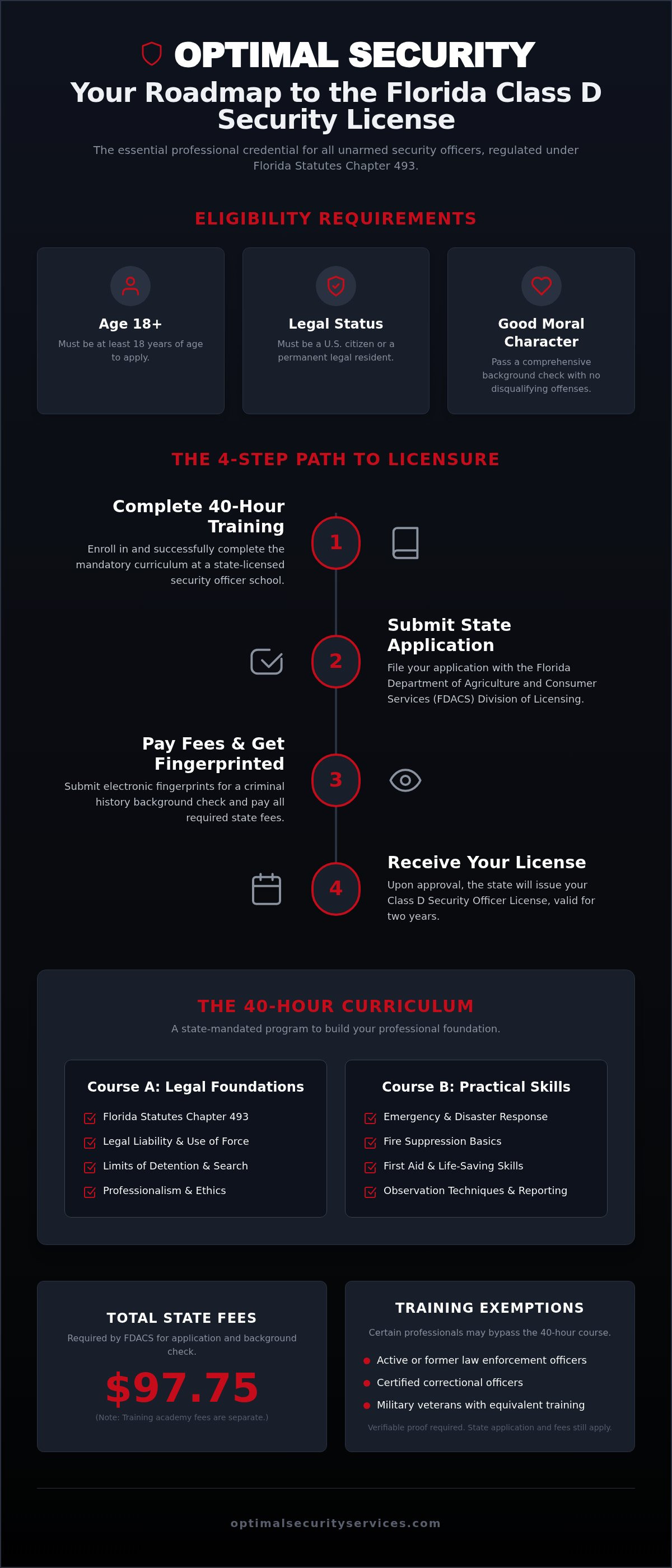
Step-by-Step: From Training to Your Florida License
Moving from the classroom to a professional post requires a methodical approach to the state's administrative requirements. Once you complete the mandatory 40-hour security license training florida curriculum, the transition into the workforce begins with securing your official credentials. This process is designed to ensure that only disciplined, vetted individuals enter the field of private protection. You'll need to coordinate your training completion with several state-mandated logistical steps. It's a journey that rewards those who are prepared and organized.
Your first milestone is obtaining the certificate of completion from your training provider. This document serves as the primary evidence that you've mastered the state-required curriculum. Following this, you must submit to electronic fingerprinting through an approved Livescan vendor. This step is critical for the mandatory criminal history background check conducted by the Florida Department of Law Enforcement and the FBI. Finally, you'll complete the FDACS Class D Security Officer License application, ensuring all fees are correctly accounted for. The total state fees for a new license currently amount to $97.75, which covers the application, fingerprint processing, and retention fees.
The Application and Background Check
Accuracy is paramount when submitting your paperwork to the Division of Licensing. To ensure your application is processed without friction, you must gather the following documentation:
- A recent color passport-sized photograph (2x2 inches).
- Proof of your U.S. citizenship or legal work authorization.
- Your original certificate of completion from a licensed security school.
- A copy of your electronic fingerprinting receipt from the Livescan vendor.
The Livescan process is usually efficient, but you must ensure the vendor transmits your prints correctly to the state. Many applicants face unnecessary delays due to simple oversights. Common errors include missing signatures, blurred photographs, or failing to include the original training certificate. By double-checking every detail, you project the same precision required in the security profession itself. If you're ready to begin this process with a steadfast partner, enroll in our security training program today.
Passing the Final Certification Exam
The 40-hour course concludes with a mandatory certification exam designed to test your grasp of Florida law and procedural tactics. You'll face questions regarding legal liability, emergency response, and professional ethics. To pass, you must achieve a score of at least 70 percent. Success on this exam isn't just about memorization; it's about understanding how to apply your training in real-world scenarios. If you don't pass on your first attempt, state rules generally allow for a retake after a period of additional review. We recommend focusing your study on the legal boundaries of the Class D license, as these sections often carry the most weight. Mastering this exam is your final step toward a career defined by authority and quiet strength.
Why Train with Optimal Security School?
Selecting a training facility is the most significant decision you'll make at the start of your career. At Optimal Security, we recognize that the quality of security license training florida applicants receive directly impacts their professional authority. Our center is dedicated to those who approach this industry with a sense of gravity and purpose. We don't just teach the minimum requirements; we focus on the deep legal and professional responsibilities that separate a true protector from a mere observer. It's a commitment to a standard of excellence that defines our entire approach.
Our instructional philosophy is built on the traditional values of honor and diligence. We believe that a disciplined mind is an officer's most valuable tool. Whether you're learning about the nuances of search and seizure or the complexities of emergency response, our goal is to build a narrative of competence that serves you for years. This commitment to modern professionalism ensures you're prepared for the technological and social challenges of the contemporary landscape. We provide a protective calm that allows you to focus entirely on mastering your craft.
Expert Instruction for Modern Professionals
Success in this field requires guidance from those who have already mastered the craft. Our instructors are seasoned experts who treat security as a rigorous discipline. They provide bespoke insights into the specific requirements of the Miami market and the broader Florida region. We offer a training environment that is both welcoming and highly organized, creating a space where students can focus on the technical details of their future roles. This proactive approach ensures you're ready for the realities of the job from day one. You'll learn to project a quiet strength that commands respect in any environment.
Start Your Security Career Today
We pride ourselves on being a steadfast partner in your journey toward professional licensure. We understand that your goal is to enter the workforce as quickly and efficiently as possible. Optimal Security provides the structured support you need to navigate the state application process while gaining the skills to feel confident on the job. Choosing a school that values your success as much as you do is essential for long-term growth. Because we focus on specialized security license training florida standards, our graduates are highly prepared for immediate entry into the workforce. Take the first step toward a rewarding career in private protection. Enroll in your Security D License training with Optimal Security today.
Secure Your Future as a Licensed Professional
Navigating the path to a Class D license is a significant milestone that requires both discipline and a clear understanding of the state's rigorous standards. You've learned that professional certification is more than a legal formality; it's a commitment to the safety of others and the integrity of the private protection industry. By mastering the 40-hour curriculum and following the methodical application steps outlined in this guide, you position yourself as a prepared and authoritative expert in the field.
The quality of the security license training florida provides will define your early career success. Choosing a Florida-licensed training facility ensures you receive an expert-led curriculum specifically focused on the realities of the modern security landscape. Whether you're just starting or seeking to formalize your experience, having a steadfast partner makes all the difference in your professional journey. We invite you to Begin Your Florida Security Career with Optimal Security Training and discover the confidence that comes with specialized preparation. Your new career in private protection starts with a single, decisive step toward excellence. We look forward to guiding you toward your goals.
Frequently Asked Questions
How many hours of training are required for a Florida Class D license?
You must complete a minimum of 40 hours of professional instruction from an FDACS-licensed school to qualify for your license. This comprehensive program is typically divided into Course A and Course B. Course A covers 24 hours of legal and emergency procedures; Course B provides 16 hours of public relations and tactical skills. High-quality security license training florida ensures you're prepared for the legal responsibilities of the industry.
Can I work as a security guard while my Florida license application is pending?
You cannot legally perform security services until your Class D license is officially issued and in your possession. Working without a valid license is a violation of Florida Statutes Chapter 493 and can lead to personal fines or being barred from the industry. It's essential to wait for the FDACS to finalize your background check and issue your credentials. This ensures you remain compliant throughout your professional journey.
How long is the Florida Class D security license valid?
A Florida Class D security license is valid for a period of two years from the date of issuance. You'll need to submit a renewal application and pay the required fees to maintain your active status before the expiration date. The current renewal fee is $45, along with a $16.75 fingerprint retention fee. Staying organized with your renewal timeline ensures your career in private protection remains uninterrupted and legally compliant.
What is the difference between a Class D and a Class G license in Florida?
The primary difference lies in the authority to carry a firearm while on duty. A Class D license is the foundational credential required for all unarmed security work in Florida. In contrast, a Class G license is an additional certification that allows a licensed officer to work in an armed capacity. You must hold a valid Class D license and complete 28 hours of specialized firearms instruction to qualify for the Class G designation.
Does a criminal record prevent me from getting a security license in Florida?
A criminal record doesn't automatically disqualify you, but certain offenses will prevent you from obtaining a license. The FDACS conducts a thorough fingerprint-based background check to assess your moral character. Felonies or crimes involving moral turpitude often result in application denial. If you have a history of arrests, it's best to consult the FDACS directly to determine if your specific background meets the state's standards for security license training florida.
How much does the FDACS charge for a security license application in 2026?
The total state fee for a new Class D Security Officer license in 2026 is $97.75. This amount is a combination of the $45 initial application fee, a $42 fingerprint processing fee, and a $10.75 fingerprint retention fee. These costs are paid directly to the FDACS during the application process. These are state-mandated fees and are separate from the tuition you'll pay to your chosen training facility for the mandatory 40-hour course.
Is the Florida security license exam difficult?
The final certification exam is designed to be manageable for students who have actively participated in their 40-hour curriculum. It focuses on practical application of Florida laws, emergency response protocols, and professional ethics. While the test requires a passing score of 70 percent, specialized security license training florida programs provide the study materials and instructor guidance needed for success. If you've mastered the course modules, you should feel confident and prepared for the testing process.
Where can I get fingerprinted for my Florida security license?
You must visit an approved Livescan vendor to complete your electronic fingerprinting for the mandatory background check. Many local sheriff's offices or private tax collector offices provide these services throughout the state. It's critical to ensure the vendor you choose is authorized to transmit fingerprints directly to the FDACS. We recommend scheduling your appointment immediately after finishing your training to avoid delays in your application processing time.


