
The 40-hour training mandate isn't just a regulatory hurdle; it's the professional foundation that separates a casual applicant from a career-ready security officer. Understanding the security d license requirements florida mandates is often the most daunting part of entering the field. You might feel confused by the technical language of Florida Statute Chapter 493 or anxious about how a background check might impact your eligibility. It's natural to feel a sense of uncertainty when your career path depends on precise state compliance and a significant time commitment.
We recognize that the journey to professional licensure can feel like a complex maze of fees, fingerprints, and intensive coursework. This 2026 guide provides a definitive roadmap to mastering the state-mandated prerequisites and application steps so you can launch your security career with total confidence. We'll examine the essential eligibility checklist, the specific breakdown of the 40-hour curriculum, and the exact procedure for submitting your application to the FDACS. Whether you're ready to begin your training today or simply exploring your options for the future, this professional guide ensures you're prepared for every step of the process.
Key Takeaways
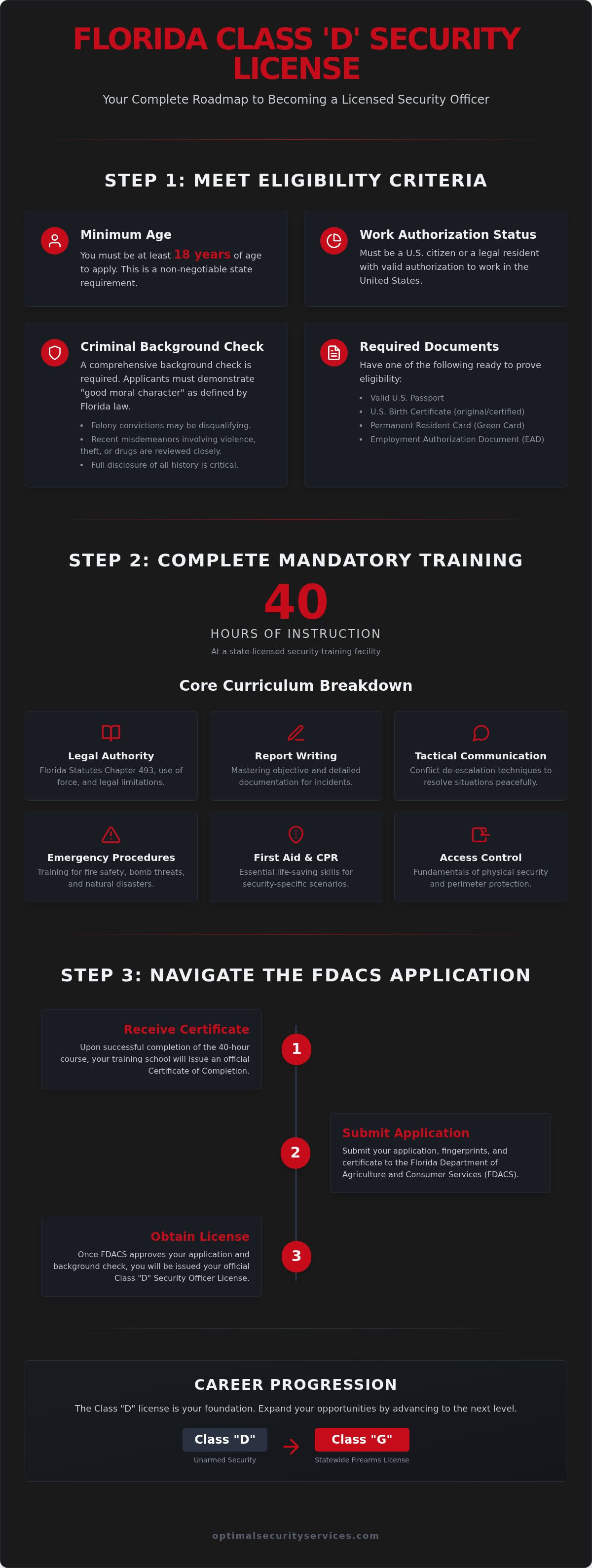
- Identify the fundamental eligibility criteria for licensure, including the minimum age of 18 and the specific work authorization status required by the state.
- Master the mandatory security d license requirements florida through a structured 40-hour curriculum that focuses on legal authority, professional report writing, and emergency response.
- Navigate the FDACS application portal with precision by understanding the essential role of your training school's Certificate of Completion.
- Explore the strategic progression from unarmed Class D status to the Class G Statewide Firearms License to expand your career opportunities.
- Learn how specialized instruction bridges the gap between basic state compliance and the practical readiness needed for a successful security career.
Understanding Florida Class D Security License Eligibility
Entering the security field in Florida requires meeting specific legal standards before you even step into a classroom. These preliminary security d license requirements florida mandates serve as a foundational filter to ensure the safety and reliability of the workforce. You must be at least 18 years of age to apply. This age threshold is non-negotiable; it aligns with the legal responsibilities inherent in the Security Guard Profession. Whether you are a lifelong resident or a newcomer with legal work authorization, the documentation process is your first step toward professional standing.
Citizenship and Residency Documentation
Legal status is the next critical pillar. US citizens can provide a passport or birth certificate to establish eligibility. If you're a legal resident, you'll need your Permanent Resident Card or a valid employment authorization document issued by USCIS. While you don't necessarily have to be a Florida resident to hold the license, you must provide a valid mailing address where the Florida Department of Agriculture and Consumer Services (FDACS) can reach you. Having these documents ready prevents administrative delays during the application phase. Accepted forms of identification include:
- Valid U.S. Passport
- Original or certified copy of a U.S. birth certificate
- Permanent Resident Card (Green Card)
- Employment Authorization Document (EAD)
Background Checks and Moral Character
The state's vetting process is rigorous and relies on a comprehensive criminal history check. It's vital to understand that an arrest doesn't carry the same weight as a conviction, yet all history must be disclosed. Transparency is the hallmark of a professional officer. According to Florida Chapter 493, good moral character is defined as a personal history of honesty, fairness, and respect for the rights of others and for the laws of the state and nation. This legal standard is the yardstick by which every applicant is measured.
A criminal history doesn't always lead to an automatic denial, but it does trigger a closer review by the FDACS. Convictions for felonies usually disqualify an applicant unless their civil rights have been formally restored. Misdemeanors involving violence, theft, or drug offenses within the last few years can also cause significant delays. By identifying these potential disqualifiers before you invest in training, you can seek legal counsel or wait for the necessary time to pass. This proactive approach ensures you're moving toward a career you can legally attain.
The 40-Hour Mandatory Training Requirement
Florida law is clear. You can't work as an unarmed security officer without completing 40 hours of professional instruction at a licensed facility. This mandate ensures every officer possesses a standardized baseline of knowledge before they assume the responsibility of protecting property or people. The security d license requirements florida established by the state are designed to move beyond basic observation; they prepare you for high-stakes decision-making and professional readiness. This training isn't just a hurdle; it's the foundation of your career.
Curriculum Breakdown: What You Will Learn
The 40-hour course is typically divided into two distinct blocks of 24 and 16 hours. During this time, you'll dive deep into Florida Statutes Chapter 493, which serves as the legal framework for your entire career. Understanding your legal authority, including the limits of your power to detain or use force, is paramount. Other core modules include:
- Tactical Communication: Learning de-escalation techniques to resolve conflicts without physical intervention.
- Report Writing: Mastering the art of objective, detailed documentation that can stand up in court.
- Emergency Procedures: Training for fire safety, bomb threats, and natural disasters.
- First Aid and CPR: Gaining life-saving skills specifically tailored for the security context.
- Access Control: Understanding the fundamentals of physical security and perimeter protection.
Beyond tactical skills, the state emphasizes ethics and professional conduct. A security officer's reputation is built on reliability and integrity. You'll explore real-world scenarios where ethical dilemmas arise, ensuring you have the "quiet strength" needed to represent your employer with honor. For those looking to master these skills in a professional environment, choosing a school like Optimal Security ensures your training meets the highest state standards.
Training Exemptions and Special Cases
Not every applicant needs to start from scratch. If you're an active or former law enforcement officer, you may be exempt from the 40-hour training requirement provided you meet specific criteria. Similarly, military veterans with certain training backgrounds can often apply their service experience toward their license. You can find more details on these specific paths via the official FDACS Class D License Information page.
If you hold a security license from another state, Florida doesn't automatically grant reciprocity. You must still submit an application and may need to complete a portion of the Florida-specific training to bridge the gap in legal knowledge. Validating these credentials requires direct coordination with the Division of Licensing to ensure your previous experience aligns with current Florida standards. It's a methodical process, but it ensures everyone on the job is equally prepared.
Navigating the FDACS Application Process
Once you've completed your 40-hour training, the focus shifts to the formal vetting required by the state. This administrative phase is managed through the Florida Department of Agriculture and Consumer Services (FDACS) portal. Your Certificate of Completion from your training school is the most critical document here. It serves as verified proof that you've fulfilled the educational security d license requirements florida demands. Along with this certificate, you'll need to submit a professional, passport-style photograph that meets FDACS standards for clarity and size.
The Livescan Fingerprinting Process
Electronic fingerprinting, known as Livescan, is a mandatory step for the background check process. You must locate an approved vendor within Florida to perform this service. When you arrive, you'll need to provide a specific ORI number, which is the code that identifies the Division of Licensing as the recipient of your background report. This ensures your data is correctly linked to your application file. Typical processing times for these background results range from a few days to two weeks. It's a precise system that requires accuracy at the point of entry to avoid delays.
Fees and Submission Timelines
The financial commitment for the license is split between the state application and the background check logistics. For a new Class D license in 2026, the total fee submitted to FDACS is $97.75. This includes a $45 application fee, a $42 fingerprint processing fee, and a $10.75 fingerprint retention fee. These costs are separate from the fees charged by the training school or the individual Livescan vendor for their services. Having these funds prepared allows for a smoother submission process.
Applicants can choose between submitting everything through the online portal or scheduling an appointment at one of the FDACS regional offices. Online submission is often the fastest route for those who have digital copies of their documents ready. Once submitted, you can track your status directly through the FDACS website. The entire process is anchored in the legal standards of Florida Statutes Chapter 493, ensuring that every officer enters the field with the same level of scrutiny and professional standing. This methodical approach might feel rigorous, but it provides the peace of mind that the industry remains disciplined and secure.
Career Progression: From Class D to Class G Licensure
The Class D license is your entry point into a regulated and disciplined industry. It serves as the mandatory foundation for any professional aiming to advance in the field. While mastering the security d license requirements florida mandates is your immediate goal, it's helpful to view this credential as the first step in a broader career path. Once you've secured your unarmed status, you gain the eligibility to pursue specialized roles that offer increased responsibility and higher earning potential. This progression is methodical; it rewards those who demonstrate reliability and a commitment to ongoing professional development.
The Armed Security Path (Class G)
For many officers, the transition from unarmed to armed security is the most logical career move. This requires obtaining the Class G Statewide Firearms License. To qualify, you must already hold or be in the process of obtaining your Class D license. The state requires an additional 28 hours of specialized firearms training from an FDACS-approved instructor. This curriculum focuses heavily on legal limitations, weapon safety, and mechanical proficiency. You'll also need to pass a range qualification and, in some cases, a psychological evaluation to ensure you possess the composure required for armed duty.
The shift to armed status brings a significant change in your daily professional landscape. Armed officers are often tasked with protecting high-value assets or providing security in environments where the risk profile is elevated. Consequently, these positions typically offer higher salary ranges compared to unarmed roles. It's a path that demands a high register of discipline and a constant state of readiness. If you're ready to take this essential first step, you can begin your journey by completing your security d license training with a school that values professional excellence.
Renewal and Continuing Education
Maintaining your professional standing requires attention to the state's renewal cycles. Your Florida Class D license is valid for two years. To avoid expiration, you must submit a renewal application and a $45 fee to the FDACS before your current license lapses. If you allow your license to expire by more than six months, you may face a $90 late fee or be required to restart the application process entirely. Keeping your contact information updated through the FDACS portal ensures you receive renewal notices and important regulatory updates on time.
Beyond the administrative requirements, staying in "good standing" involves adhering to the ethical standards you learned during your initial 40-hour course. The Florida security industry values officers who are proactive, prepared, and highly organized. By treating your renewal as a moment to review current statutes and tactical best practices, you reinforce your value to your employer and the clients you serve. This dedication to the craft is what defines a true professional in the modern security landscape.
Why Choose Optimal Security for Your D License Training?
Choosing where to complete your education is a strategic decision that influences your professional trajectory. At Optimal Security, we recognize that mastering the security d license requirements florida mandates is more than an administrative task. It's the beginning of a disciplined career path. Our facility provides a professional environment that mirrors the gravity of the industry you're entering. We offer expert instruction tailored specifically to the Florida private security market, ensuring our graduates are not just licensed, but truly ready for the field. Our comprehensive support system guides you from the initial enrollment phase through to the final issuance of your training certificate.
A Curriculum Designed for Professional Excellence
We provide a curriculum that moves well beyond the basic legal minimums. Our instructional methods focus on high pass rates and, more importantly, long-term retention of critical skills. By focusing on both legal authority and tactical responsibilities, we instill the confidence required for high-stakes security environments. You'll learn to operate with the "quiet strength" and composure that modern employers demand. This specialized focus ensures you understand the nuances of Florida Statute Chapter 493 while gaining practical knowledge of report writing and de-escalation. We believe in building a foundation of reliability and protective calm in every student we train.
Enroll in Your Florida Security Training Today
Registering for your 40-hour Class D course is the essential first step in your Florida security career. Our enrollment process is organized and proactive, allowing you to secure your spot in an upcoming session without unnecessary delays. To prepare for your first day at Optimal Security, we recommend reviewing the eligibility criteria discussed earlier and ensuring your documentation is in order. Our strategic location within the Florida security community provides a unique vantage point and a network of professional connections that can benefit you throughout your career.
If you're ready to commit to a path of diligence and specialized expertise, our team is prepared to assist you. Contact us for personalized guidance regarding the security d license requirements florida process or to learn more about our upcoming training schedule. We pride ourselves on being a dedicated partner to our students, offering the steady and methodical instruction needed to succeed. Start your journey with a school that values traditional service values and modern professional rigor. We're here to ensure you move forward with the readiness and commitment your new career demands.
Launch Your Professional Security Career Today
Securing your future in the private security industry requires a methodical approach to state compliance and professional readiness. You've seen that mastering the security d license requirements florida mandates involves a clear three-fold process: establishing eligibility, completing 40 hours of specialized training, and navigating the formal FDACS application. Whether your goal is immediate employment or a long-term path toward armed licensure, the quality of your initial education is the foundation of your success.
At Optimal Security School, we provide an FDACS-compliant curriculum led by seasoned professional instructors who offer dedicated support for Florida students throughout the licensing journey. We're committed to your growth as a disciplined and authoritative expert in the field. Don't leave your career progression to chance; instead, choose a partner that values your professional integrity. Enroll in Our Mandatory 40-Hour Security D License Training today to begin your journey with confidence and quiet strength. Your new career path is ready when you are.
Frequently Asked Questions
How long does it take to get a security D license in Florida?
The total timeline includes completing 40 hours of mandatory training followed by the state's administrative processing period. Once you submit your completed application to the FDACS, background checks usually take a few days to two weeks. Florida law allows the state up to 90 days to issue the license, but most applicants receive theirs within 30 to 45 days. It's a methodical process that rewards early preparation and document accuracy.
Can I get my Florida security license online in 2026?
You can complete the formal application and submit your fees through the FDACS online portal, but you must still attend physical training sessions. While some portions of the curriculum may offer digital components, Florida law requires specific instructional standards that often necessitate in-person attendance at a licensed facility. You'll also need to visit an approved Livescan vendor in person for electronic fingerprinting to meet the security d license requirements florida mandates.
What crimes disqualify you from a security license in Florida?
Felony convictions generally disqualify you from licensure unless your civil rights have been formally restored by the state. Misdemeanors involving theft, violence, or moral turpitude within the last few years can also lead to a denial of your application. The state evaluates each applicant's history under the "good moral character" standard defined in Chapter 493. It's best to consult a legal professional if you have concerns about a specific incident in your past.
Do I need a high school diploma for a Class D security license?
Florida law does not strictly require a high school diploma or GED to obtain a Class D Security Officer license. However, the role requires a high register of literacy for professional report writing and understanding legal statutes. Most employers in the Florida security market prefer candidates with a diploma or equivalent. Demonstrating the ability to follow complex instructions and document incidents accurately is essential for long-term career success and professional standing.
How much does the total Florida security license process cost?
The total cost typically ranges between $190 and $390 depending on your choice of training school and fingerprinting vendor. This figure includes the $97.75 fee paid to the FDACS for the application, fingerprint processing, and retention. You must also account for the cost of the mandatory 40-hour training course and the individual vendor fee for Livescan services. Having these funds prepared ensures a steady and uninterrupted application experience as you enter the profession.
What is the difference between a Class D and a Class G license?
A Class D license allows you to work as an unarmed security officer, while a Class G license is the Statewide Firearms License required for armed roles. You must hold or be applying for a Class D license to obtain a Class G. The armed license requires an additional 28 hours of specialized firearms training and annual range qualification. This progression is a common career path for those seeking increased responsibility and higher earning potential.
Can I work as a security guard while my application is pending?
You cannot legally work as a security officer until the FDACS has issued your license or a verified temporary permit. Florida is strict about unauthorized security activity; working without a valid license is a felony offense. Some employers may hire you for non-regulated roles while you wait, but you must have your physical license or state approval in hand before you begin any regulated security duties or wear a uniform.
How many hours of training are required for a Florida security license?
You must complete exactly 40 hours of professional instruction at a state-licensed training facility to be eligible for licensure. This curriculum is usually divided into a 24-hour block and a 16-hour block covering legal authority, emergency procedures, and first aid. Completing these hours is the most critical part of meeting the security d license requirements florida has established for new officers. This training ensures you possess the "quiet strength" needed for the field.


